News
Anishta Teeluck: African champion, Olympic swimmer and SKEMA student
Anishta Teeluck has built her life around water, discipline and movement. Born in Milan, with dual Italian and Mauritian citizenship, she grew up in Italy, where she began swimming as a child and competed at both junior and elite national level. After the Covid period, she chose to represent Mauritius internationally, a decision that opened a new chapter in her sporting career.
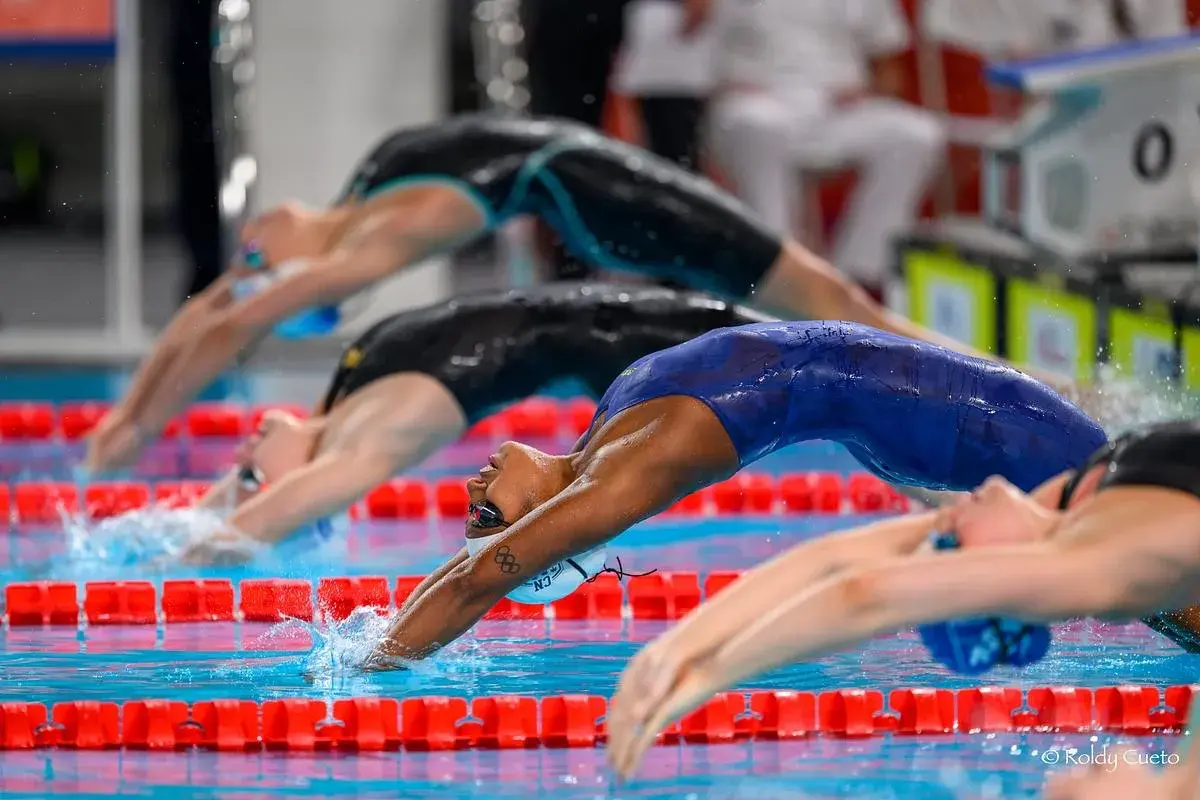
Since then, she has competed in African championships, world championships and, in 2024, the Olympic Games in Paris, where she represented Mauritius in the 200m backstroke. Crowned African champion twice in the 200m backstroke in 2024, she is also a multiple Mauritian national record holder. Two weeks ago, at the African Championships in Algeria, she broke a historic 34-year-old national record in the 400m freestyle and won silver in the 200m backstroke, despite being ill during the competition.
Following the Games, she received a World Aquatics scholarship to train in Antibes, alongside other international athletes. Alongside her sporting career, she is pursuing the MSc Sport, Event and Hospitality Management at SKEMA Business School’s Sophia Antipolis campus.
Can you tell us about your background and your journey as a swimmer?
I was born in Milan and I have dual citizenship: I am Italian and Mauritian. I grew up in Italy, where I studied and began my swimming career. I am now pursuing a master’s degree in Sport, Event and Hospitality Management at SKEMA, and I will start my second year in September. I started swimming when I was around two years old. My mother put me in the pool, and that is how it began. I started competitive swimming when I was five or six.
Mauritius is a small island, a small country, and we did not have a very large delegation. I think we were around 13 athletes in total.
At first, I mainly swam in Italy for my club and competed at Italian national level, both in junior and elite competitions. I reached the finals at the Italian junior national championships. Then, after Covid, I felt that I needed to experience something more.
Is that when you decided to represent Mauritius?
Yes. In swimming, you can only have one sporting nationality. I decided to use my Mauritian nationality and went to Mauritius to take part in competitions. That opened many doors for me. I competed in several African championships, world championships and then the Paris 2024 Olympic Games in the 200m backstroke. That decision changed my path.
When did swimming become more than a passion?
After Covid, around 2022. I started travelling for competitions and received some support from the government after winning medals at continental level. It was not a lot, but it helped. That was when I thought: “Now this is becoming serious.”
After the Olympics, I received a scholarship from World Aquatics to train in Antibes, in a training centre with other international athletes. I have been based here since last year. I then decided to continue my studies and join SKEMA.
You represented Mauritius at the Paris 2024 Olympic Games. What did that experience mean to you?
It was huge. Mauritius is a small island, a small country, and we did not have a very large delegation. I think we were around 13 athletes in total.
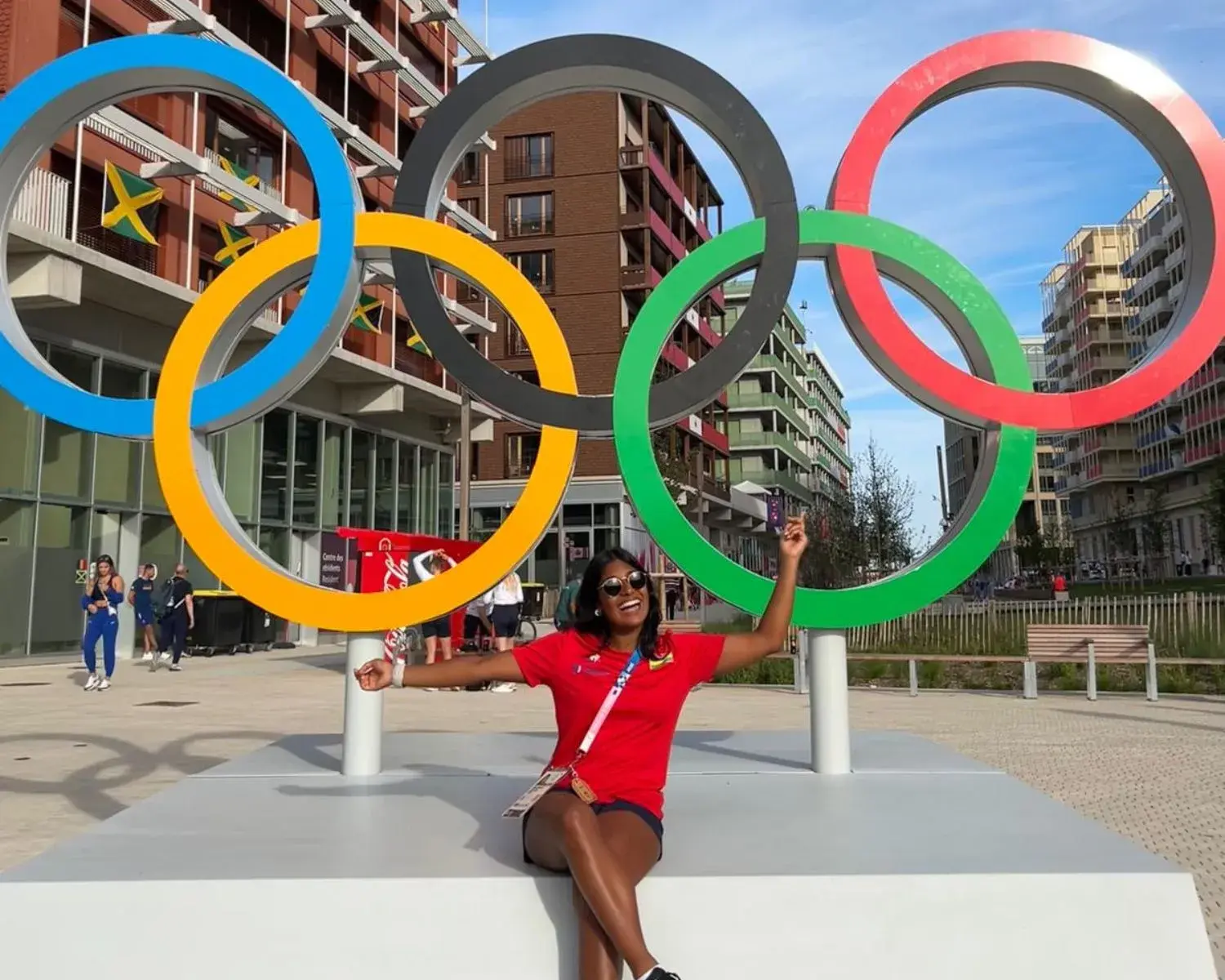
I was able to experience the Olympic Village, the opening ceremony and the closing ceremony. I stayed in Paris for almost a month, and it was amazing. When you enter the Olympic Village, it feels like another world. Everything is made for athletes. You see athletes from everywhere. It is an experience unlike any other.
What do you remember from your race?
On the day of my race, I was in the first heat of the day. I felt as though all eyes were on me. When I entered the pool area, I saw the crowd around me and heard everyone shouting. I remember thinking: “Where am I?”
If I put too much pressure on myself, it affects my performance.
It was impressive. I was not as focused as I would have liked to be. My emotions took over a little. But it was an amazing experience. I enjoyed the Olympics, and now my goal is to reach the Los Angeles Olympic Games in 2028.
You specialise in backstroke. What do you like about this discipline?
I like every stroke, but I am faster in backstroke, so that became my discipline. I have competed a lot since I was young, and I still compete a lot today.
For most races, except the Olympics, which were different, I try not to think too much about pressure. I do not tell myself: “I have to win” or “I have to swim this specific time.” If I put too much pressure on myself, it affects my performance.
I try to follow my routine: wake up, have breakfast, do my warm-up, get ready, put on my suit and go to the call room. I focus on what I know how to do.
How do you balance high-level sport and your studies at SKEMA?
Organisation is very important. Being close to my training centre in Antibes helps a lot. I also have a car here, which makes things easier. If I had to take the bus every time, it would be much more difficult.
SKEMA also gives me flexibility. Sometimes I arrived late to class because of training, but the professors knew my situation and were understanding. That helped me attend classes when I could, listen to the lectures and keep up with the programme.
My classmates also helped me a lot. When I did not understand something, they took the time to explain it to me and send me their notes. That support made a real difference.
Does this dual project require sacrifices?
Yes. I do not really have much of a social life. I swim, I go to school, I study. Sometimes I have dinner with my classmates, but that is it.
You have to make sacrifices. For now, I am happy with it, and my results have been good, so I feel positive about the situation.
What has swimming taught you about discipline, resilience and failure?
My motto is never to give up. After the Olympics, I went through a more difficult period. I was not performing as I had before. In those moments, you have to continue and trust the process.
If you keep training and keep doing everything you can, the results will come. You have to stay consistent, determined and focused on your goals. When something does not work, you have to ask yourself what went wrong and what you can improve.
What are your next goals?
In sport, my long-term goal is to compete at the Los Angeles Olympic Games in 2028. In life, I want to find a job, be stable somewhere and continue swimming, even after my career. Not at the same level, of course, but I want sport to remain part of my life.
What kind of job would you like to do?
To be honest, I do not know yet. As I am studying sport management, I would like to work for an organisation or a company involved in managing sporting events. Maybe in an Olympic committee or in the international sports sector. I am still thinking about it.
What advice would you give to students who want to pursue an ambitious project?
You need to be organised. When you have things to do, you need to follow your organisation and do them. And when you do not feel like doing something, you need to think about your goals.
Difficulties are always there. Obstacles are always there. You have to keep pushing and do things as well as you can. There are sacrifices, of course. It is difficult, but it is not impossible.
Do you have any role models in swimming?
In swimming history, Michael Phelps is a reference. But Federica Pellegrini was also one of my role models. She is Italian, and when I was a little girl in Italy, I watched her a lot.