
News
Defence careers: MIM students complete an intensive programme at the IHEDN
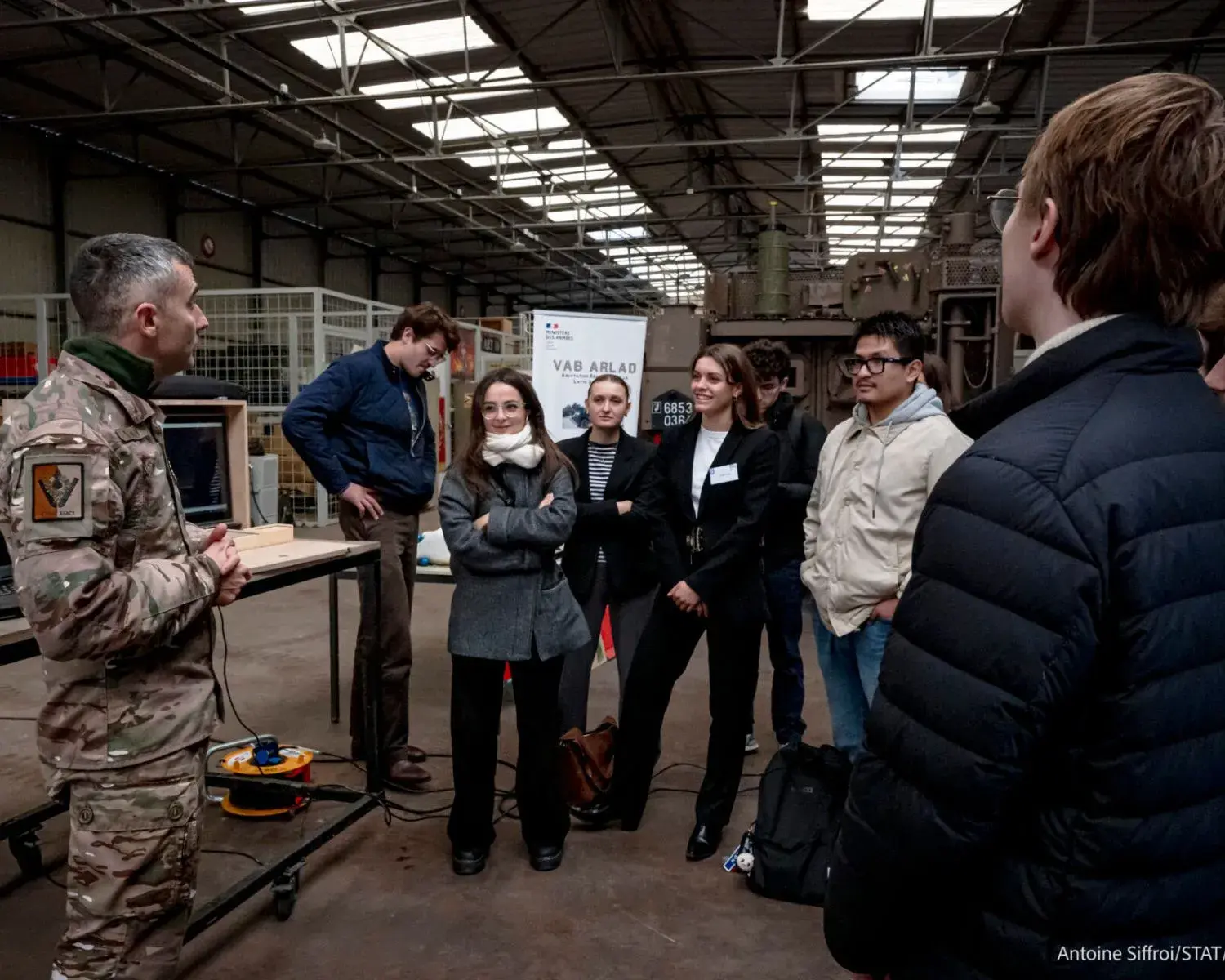
Why did you apply for the IHEDN Cycle Jeunes?
Anna Quénet: I wanted to strengthen my interest in defence, sovereignty, and economic intelligence, which are not central in a management school curriculum. The Cycle Jeunes creates direct contact with specialists and signals real commitment to recruiters in these fields. It also helped me structure my career plan and move closer to the environments in which I want to work.
We worked on a case study set by MBDA, the European missile and defence systems company
Olivier Simonetti: I applied to deepen my understanding of defence and geopolitical issues and gain recognised experience in these sectors. The IHEDN brings together very different profiles. This diversity mattered to me: testing my analyses, working in committees, and producing a position paper under a mentor’s guidance. I also wanted to explore economic intelligence, which is the path I aim to pursue.
How does the week unfold?
O.S.: The official duration is five and a half days, from Monday morning to Saturday lunchtime, which comes to 38.5 hours of training. In practice, the pace goes far beyond that. There are many lectures and committee work continues late into the evening, often until around 10 p.m. We must submit a report on Friday, then defend it before a public figure. Our group worked on retaining reservists within the 13th Alpine Chasseurs Battalion, under the guidance of a mentor from that unit.
A.Q.: My programme took place at the École Militaire in Paris, without accommodation, unlike Olivier’s. Some evenings ended at 1 a.m. We worked on a case study set by MBDA, the European missile and defence systems company, with teams divided according to PESTEL categories. It was ideal for business school students, since the issues linked economics, strategy, and defence.
What do the Cycle Jeunes programmes bring to SKEMA students?
O.S.: They provide strong recognition in defence and diplomacy circles. It is a solid line on a CV. SKEMA does not train directly for these sectors, so the programme demonstrates clear engagement with these issues. It also offers a valuable network, with engineering students, political science students, psychology students, young officers, reservists, and professionals.
I aim to build a career in economic intelligence within the defence sector. My gap-year placement will take place at the French military base in Abu Dhabi (UAE).
A.Q.: The programme goes beyond discovery. Alongside committee work, it includes two certified assignments: a summary note and a forward-looking analysis. These validate the skill “Understanding and anticipating defence and security issues”, listed in France Compétences’ Répertoire spécifique since October 2024. It is demanding and highly professional, as we must write as if addressing a senior officer.
How does the programme connect with your personal goals?
O.S.: I am pursuing a career in economic intelligence within the defence sector. My gap-year placement will also take place at the French military base in Abu Dhabi, within the influence unit. I then want to compare this with experience in private industry, with companies such as Dassault Aviation or Thales.
A.Q.: I plan to move into the public sector, then diplomacy. The internships I target relate to defence and sovereignty issues: the Ministry of the Armed Forces, Airbus Defence and Space, and public institutions.
What would you say to students who hesitate?
A.Q.: Not to limit themselves. The Cycle Jeunes seeks varied profiles. The training depends on complementary perspectives. It is a demanding experience, enriching, and a real human journey.
O.S.: It is a strong gateway into defence, security, and diplomacy sectors. The training content is concrete. The assignments require rigour, which helps for internships and interviews.
A training ecosystem centred on economic security
The interest shown by Anna and Olivier in defence and economic intelligence reflects a broader movement at SKEMA Business School. The school has strengthened its programmes in economic security, a field now central to public and private strategy.
This dynamic includes the MSc Business Consulting and Decision Intelligence (BCDI), taught in English, which offers a specialisation in Economic Security delivered at the École Militaire in partnership with the Ministry of the Interior’s Institut des Hautes Études (IHEMI). This pathway introduces students to the protection of strategic assets, risk analysis, sensitive monitoring, and sovereignty issues. It is a possible bridge for those who, like Anna and Olivier, want to pursue careers in defence, security, or economic intelligence.