
News
Makes Sense?: from Tetris to Minecraft, how can we build sustainability?
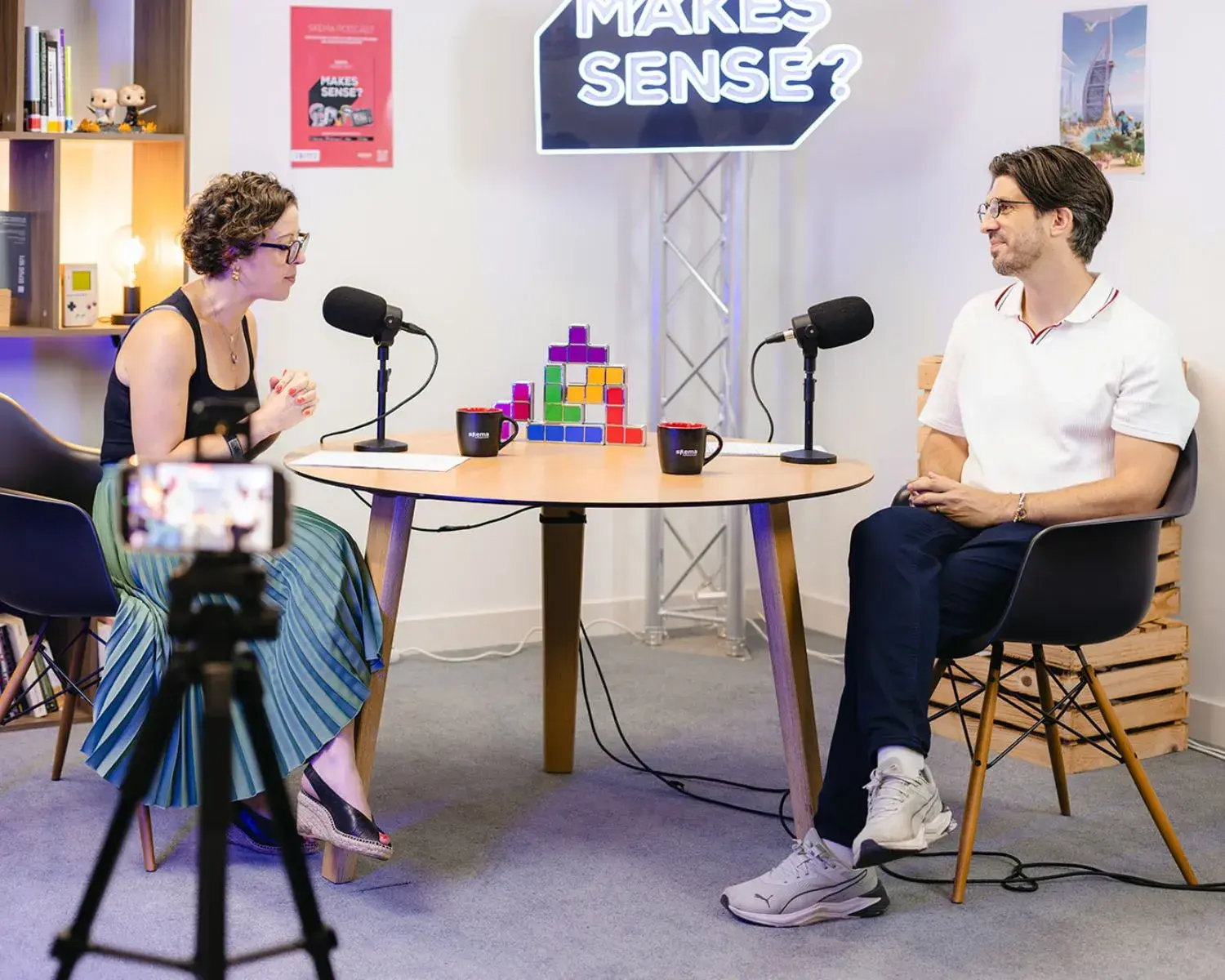
From Tetris to Minecraft
When Antoine Kunsch began his career in the early 2010s, sustainability was still handled by small teams. Their role was to collect data from across the organisation and turn it into a coherent story. “Our team consisted of two people. We had to bring all the pieces together to tell a consistent story,” he recalls.
Fifteen years later, the landscape has changed. Companies no longer limit themselves to measuring their impact. They set decarbonisation pathways and seek to embed them across their operations. Procurement, logistics, production and events teams now contribute to the effort.
“We are no longer simply trying to assemble blocks. We know which direction we want to take, and we are playing as a team.”
This shift from Tetris to Minecraft reflects a deeper transformation. Sustainability is no longer an isolated issue left to a handful of specialists. It has become a collective project that requires companies to rethink how they produce, make decisions and work together.
Performance and sustainability, working towards the same goal
Performance plays a central role at Red Bull. For Antoine Kunsch, it does not conflict with sustainability. The two can move forward together. “Many companies now use sustainability as a way to improve performance. They no longer see it only as a cost centre.”
The aluminium can offers a clear example. When it is collected and recycled, the need for energy and raw materials falls. This process reduces its impact, without making it disappear.
“You cannot create a product without causing an impact somewhere. Claiming otherwise would be misleading.”
The path to net zero therefore rests on a clear principle: emissions must be reduced at source before compensation is considered. Offsetting should only apply to residual emissions, once every other lever has been used.
This approach requires companies to examine their activities as a whole. It also means separating commitments from genuine change, a distinction that becomes less comfortable once organisations have to move beyond slogans and take action.
Building with others
Sustainability teams set the direction, provide tools and support other departments. They cannot, however, make every decision on their own. “I can give teams the tools they need. They are the ones who integrate them into their practices. It is a team effort.”
Solutions must therefore emerge from those closest to the day-to-day work. Procurement teams can review their selection criteria, logistics teams can rethink flows, and event managers can act on travel or the materials they use.
Suppliers also play a central role in this transformation. Their knowledge of processes and operational constraints allows them to identify solutions that internal teams may not see. “They know their business far better than I ever will,” Antoine Kunsch acknowledges.
The way forward also differs between countries. Europe tends to regulate the means and the different stages, while California sets a destination and lets the market determine the route. Two different models, but one shared objective: to accelerate the transition.
Staying in the game
Neither Tetris nor Minecraft has a true ending. Sustainability does not either. Targets evolve, technologies progress and new challenges emerge. “I would like us to be able to solve the problem once and for all. But I do not think that is possible.”
For companies, the challenge is therefore less about reaching a permanent end point than continuing to move forward, adapting their practices and keeping sight of the direction they have chosen.
Antoine Kunsch sums it up in one sentence: “The ultimate goal is to stay in the game.”