
News
Podcast: Stand Out or Stay Silent? Daft Punk’s LinkedIn Lesson with Fayçal Belmadi (SKEMA 2016)
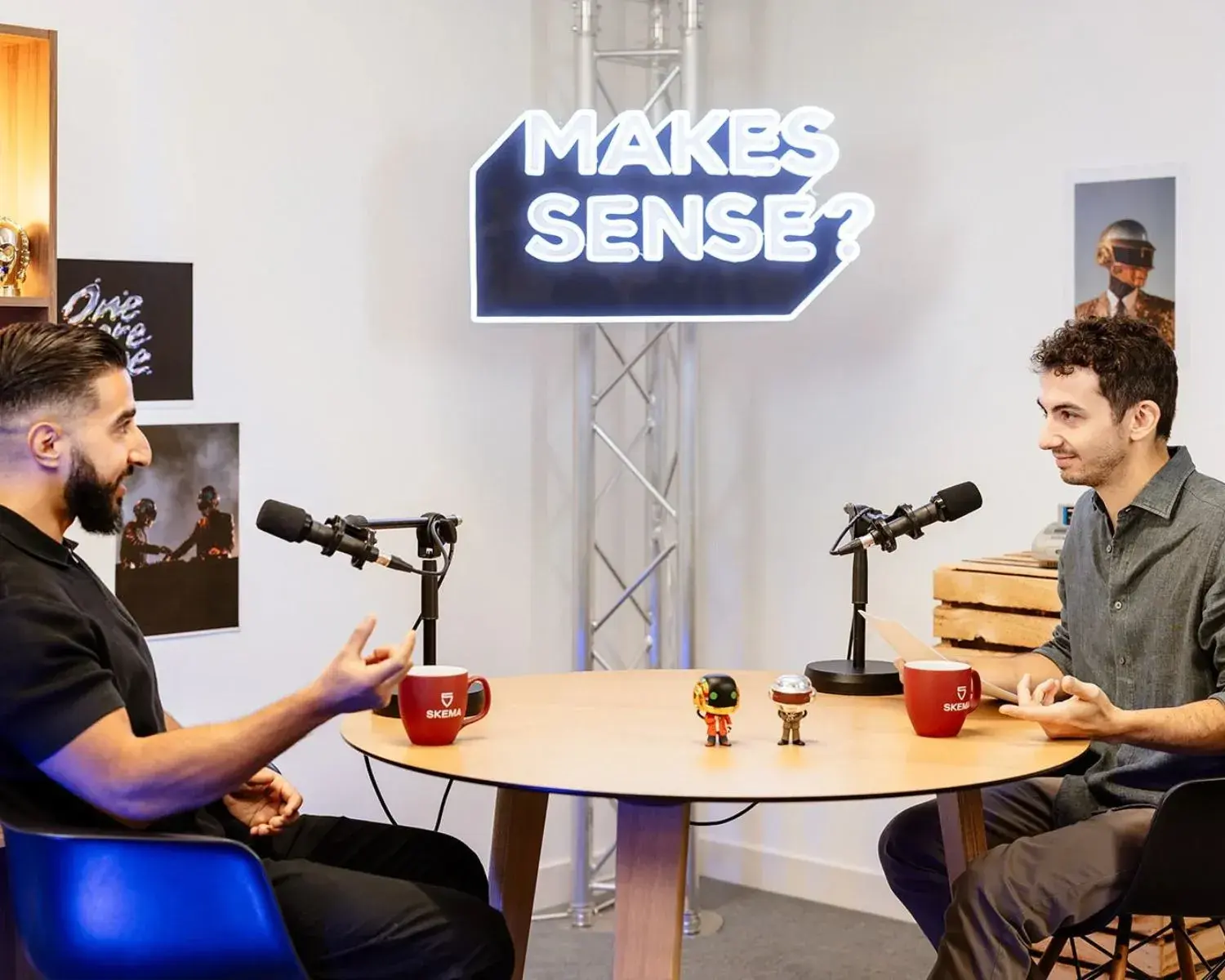
With nearly 40,000 followers and an established presence among the platform’s most visible creators, Fayçal Belmadi might be expected to offer a set of ready-made formulas. Instead, he takes the opposite approach throughout his conversation with Kevin Erkeletyan.
“I’d rather stay true to myself than stand out at all costs”
One of the most common misconceptions about LinkedIn is that you have to be different from everyone else. For the SKEMA graduate, that misses the point. “I’d rather stay true to myself than stand out at all costs,” he explains. In his view, consistency between who you are and how you present yourself online matters more than the constant pursuit of originality. A profile built around playing a role can lose credibility. An authentic voice, by contrast, can find an audience without resorting to theatrics.
“If readers remember one thing, what should it be?”
The conversation then turns to the intricate mechanics of a good LinkedIn post. Attention-grabbing hooks, stock phrases (preferably without the convoluted wording) and carefully crafted storytelling: there is no shortage of techniques. But for Fayçal Belmadi, clarity comes first. “When someone finishes reading my LinkedIn post, if they remember one thing, what should it be?” the alumnus asks himself. That question serves as his compass when writing. Before thinking about the algorithm or the format, you need to know what readers should take away. It is a straightforward approach that cuts through the sometimes complicated language surrounding personal branding.
“Never judge your post before the algorithm does”
For many professionals, posting still feels daunting. A low number of reactions can discourage even the most motivated contributors. Here again, Fayçal Belmadi encourages listeners to step back. “Never judge your post before the algorithm does,” he says during the episode. The graduate recalls how some posts he had little faith in took off, while others, “carefully prepared,” delivered more modest results. All the more reason to publish without trying to predict the audience’s response every time.
“Between a post that stays in your drafts and one that might take off…”
The line captures one of the episode’s key takeaways. “Between a post that stays in your drafts and one that might take off, you might as well give it a chance,” Fayçal explains. This mindset challenges the pursuit of perfection that can stop people from posting at all. As with Daft Punk’s experiments with new sounds, speaking up means accepting a degree of uncertainty.
One algorithm to influence them all?
Drawing on several studies discussed in the episode, Makes Sense? explores how content creators collectively develop theories about the algorithm. Posting tips, ideal times and supposed rules: these beliefs can end up making everyone’s content look alike. Yet the research presented points to a more nuanced conclusion. The most effective content neither follows the platform’s conventions to the letter nor sits entirely outside them. It combines distinctiveness with familiarity, a balance researchers call “optimal distinctiveness.”
The Daft Punk lesson
This is where the Daft Punk comparison comes into focus. The duo never rejected the conventions of popular music. They used them as a foundation for an instantly recognizable creative universe. A similar principle seems to apply on LinkedIn. Being visible does not necessarily mean speaking louder than everyone else. It means offering a personal perspective in a language people can understand. As this episode of Makes Sense? suggests, the best way to be a Daft Punk on LinkedIn may not be to wear a mask. It may be to find your own voice.
Please note: this podcast episode is in French.