
News
SKEMA and UTC join forces to shape the future of project management
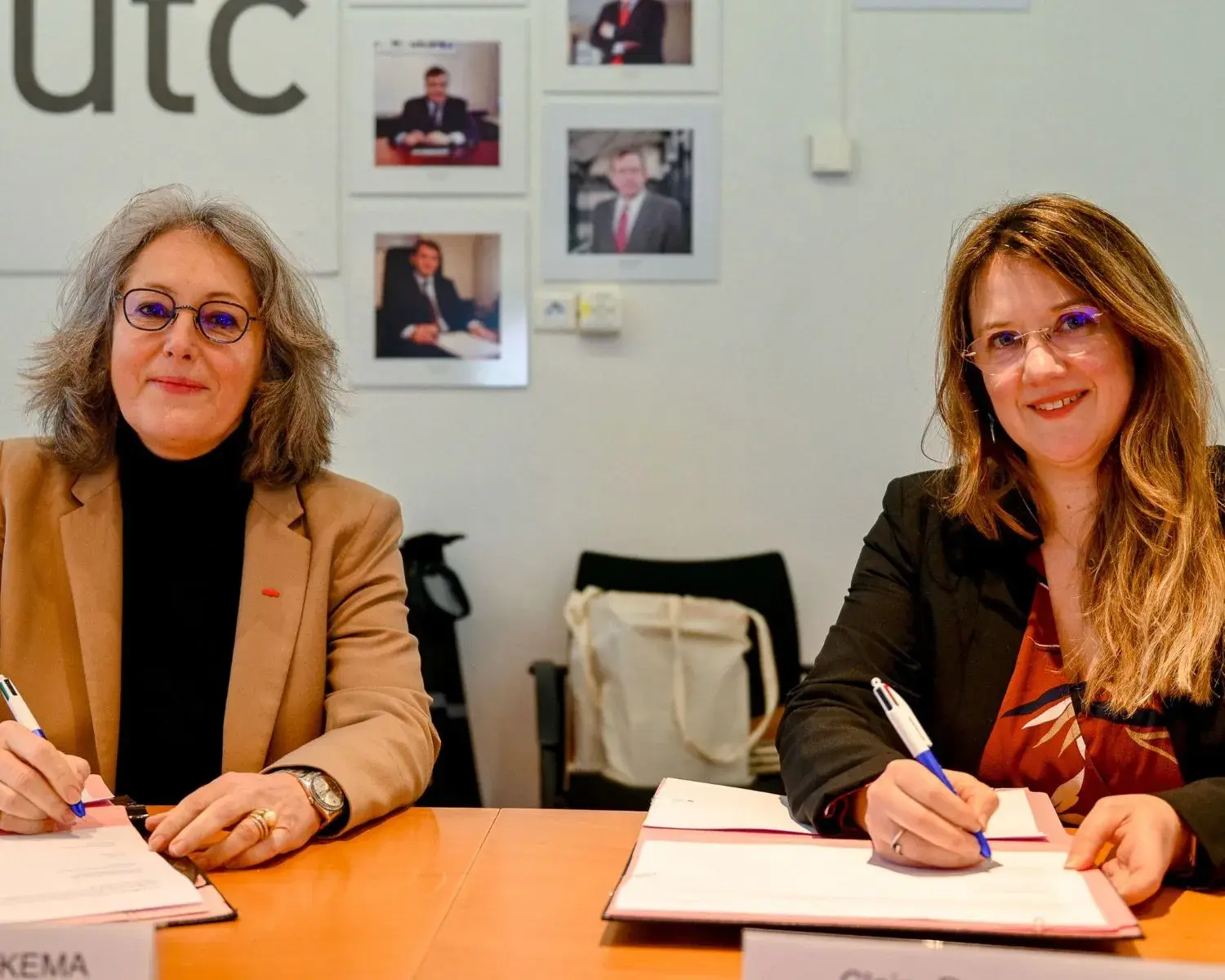
The Chair was officially inaugurated on 29 January 2026 at the Université de Technologie de Compiègne campus, in the presence of Claire Rossi, Director of UTC, and Alice Guilhon, Dean and Executive President of SKEMA Business School. Its ambition is to bridge academic research and the operational challenges faced by large industrial organisations, at a time marked by rapid technological change and volatile economic conditions.
The scientific leadership is shared by two co-holders: Thierry Gidel, Associate Professor in Management Science and Industrial Engineering at UTC and Head of the Innovative Project Management track, and Paul Gardiner, Professor at SKEMA Business School and Director of the MSc Project Management for Business Development.
Three pillars to rethink project management
The Chair’s research agenda is structured around three complementary pillars, each rooted in contemporary industrial challenges. The “Resilience & Robustness” pillar focuses on governance and decision-making in uncertain environments. Research addresses real-time project portfolio optimisation, AI-enhanced risk analysis, and the design of governance frameworks able to absorb shocks and adapt. The “People & Collaboration” pillar places human factors at the centre of project performance. It examines cognitive load, stress, collaboration within hybrid teams, and the impact of digitalisation on trust, cooperation and engagement.
The future of project management lies at the intersection of engineering, human factors and innovation
Finally, “Innovation & Efficiency” explores the transformation of project management practices, tools and roles, particularly in environments shaped by artificial intelligence, collaborative platforms and new ways of working.
A leading multidisciplinary academic team
The Chair relies on a high-level, multidisciplinary academic team. On the UTC side, Thierry Gidel works alongside Christine Divry-Groff, Associate Professor in Economics and Management Science, and Oscar Avila, Associate Professor in Project Management and member of the teaching team for the Innovative Project Management track. On the SKEMA Business School side, the research involves Paul Gardiner, Christian Linder, Professor of Strategy and Director of the Global DBA, Eliane Bacha, Professor of Organisational Behaviour, Assistant Professors Daniela Iubatti and Sarra Dahmani, as well as Desmond McGetrick, Director of the MS® Manager of Projects and Programmes.
Renault Group and Saint-Gobain as founding partners
The UTC Foundation for Innovation plays a central role in supporting the Chair. Its President, Patrick Dupin, Group Chief Operating Officer of Saint-Gobain, oversees the programme alongside two founding industrial sponsors. Renault Group is represented by Frédéric d’Arrentières, Project Management Expert Leader within the group and President of SMaP (France IPMA).
Saint-Gobain is involved through Vincent Toni, Group PMO, whose remit includes strengthening the group’s project management maturity and integrating digital transformation and artificial intelligence challenges. With an initial four-year duration and a starting budget of €100,000 per year, the Chair aims to welcome additional industrial partners. Its objective is to produce high-level academic research while developing methods, content and tools that can be directly applied by organisations. “The future of project management lies at the intersection of engineering, human factors and innovation,” say Thierry Gidel and Paul Gardiner. Patrick Dupin adds that the Chair highlights “the value of a close relationship between academia and major industrial players in preparing talent to meet the transformations ahead.”