
News
SKEMA BBA career outcomes: global opportunities, employment and further study after graduation
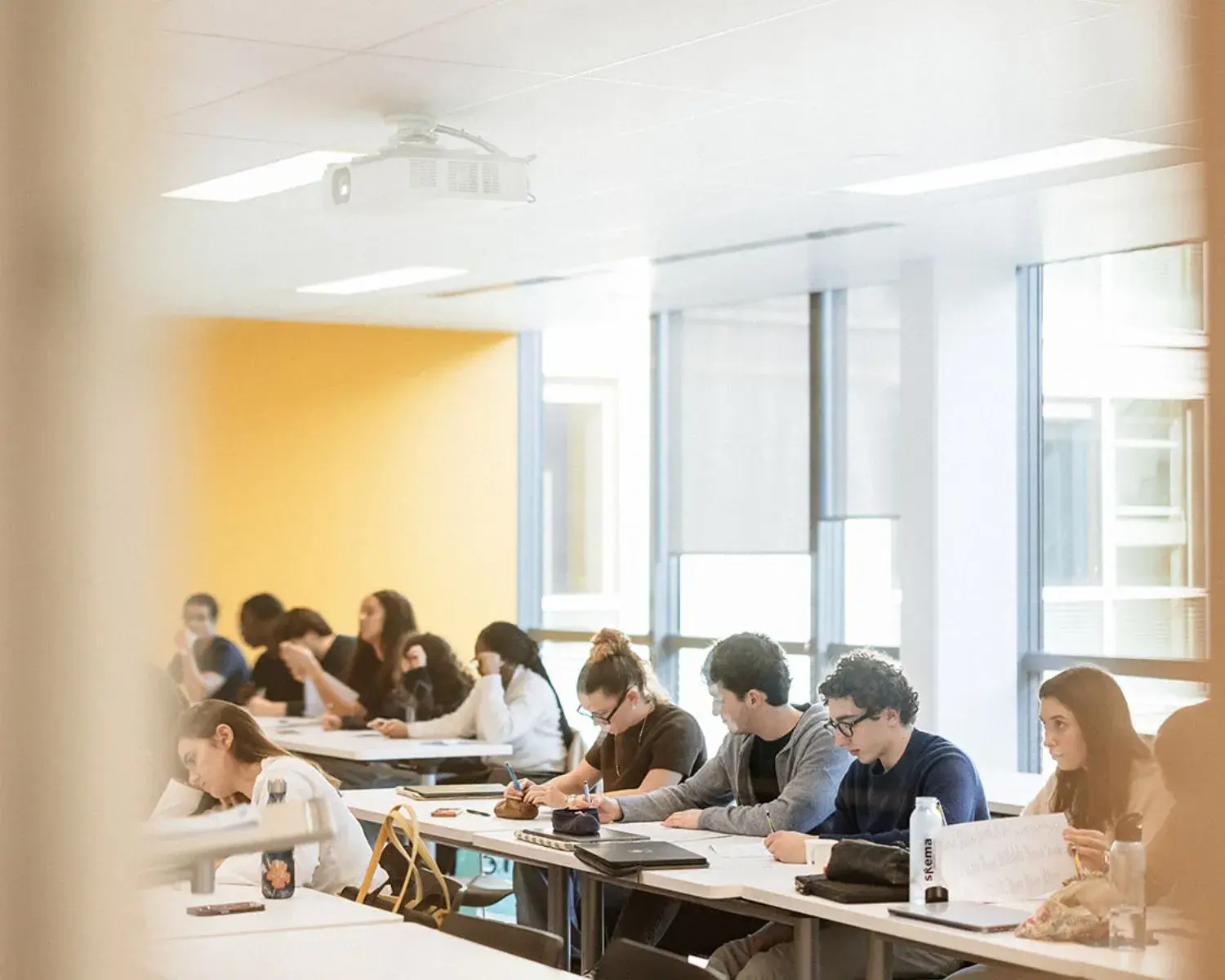
The curriculum gives students progressive business knowledge in management, finance, marketing, strategy and digital transformation. From the first year, internships and applied projects connect academic learning with real business situations!
A global school built around hands-on exposure
As an international ranked school, SKEMA offers a learning model based on mobility, business exposure and academic progression. Students study across several campuses (USA, Brazil, UAE, France, China, Spain, etc.) and develop applied understanding of different economic environments.
The programme allows students to work on company cases, develop presentations, manage projects, and build confidence before graduation. This hands-on dimension explains why many alumni enter the job market quickly after completing the degree.
Career outcomes across business sectors
The main career outcomes after the Global BBA include positions in:
- Consulting
- Finance
- Marketing
- Business development
- Project management
- Entrepreneurship
- Digital services
Many alumni begin as junior consultants, financial analysts, account managers or project coordinators. The diversity of these outcomes reflects the broad curriculum followed during the programme.
Graduate employment and worldwide mobility
Recent placement data shows strong employment results:
- 90% of graduates in activity found employment within six months
- 40% work outside their country of origin
- 55% continue academic study after graduation
This confirms the international value of the degree and the ability of alumni to adapt to business environments worldwide. Many graduates begin work in multinational companies, while others choose entrepreneurial pathways or specialist sectors.
Graduate pathways shaped by international experience
Graduate outcomes also reflect the variety of academic and professional journeys made possible by the programme. Rouddy Chacour describes his years in the Global BBA as a period that shaped both personal development and professional direction. “My years at SKEMA’s Global BBA were highly enriching, both personally and professionally. The courses were engaging and taught by highly professional faculty members. My six-month exchange in the United States made my SKEMA experience unforgettable.”
After completing the BBA, he continued within SKEMA Business School through a Master of Science in Finance, before spending two years in investment banking in mergers and acquisitions. He now works in Paris as a technical adviser to lenders on infrastructure projects.
A similar international progression appears in the experience of Joelle Semaan, who chose the Entrepreneurship specialisation. She highlights the academic flexibility of the programme: “What I appreciated most was the diversity of courses available. With my tutor, I selected my modules each semester, which gave the programme real flexibility.”
She also points to student life as a major part of the learning experience. Through the Team Market student association, she represented SKEMA at student fairs across France, an experience she says strengthened her communication skills.
Her final two years were completed in Raleigh through a double degree with North Carolina State University. After a placement in agile transformation and communication at Ingenico, she joined the company as an Atlassian tools specialist.
These trajectories illustrate how the BBA combines academic flexibility, international exposure and direct professional opportunities across sectors.
Academic opportunities after the BBA
The degree also opens further study pathways within SKEMA and beyond. After the BBA, students can enter the Master in Management (PGE), a Master of Science, or specialised postgraduate programmes. The BBA also allows access to university pathways in France and internationally. Students who continue their studies often specialise in:
- Management
- Strategy
- Data science
- Finance
- Digital business
International campuses and multicultural development
The global organisation of the programme includes campuses in Lille, Sophia Antipolis, Raleigh, Suzhou, Belo Horizonte and Dubai. This global framework helps students understand multicultural business environments and develop inclusive ways of working. The experience gained across campuses strengthens adaptability and prepares alumni for work across regions and sectors.
How the curriculum prepares students for business responsibilities
The Global BBA curriculum is designed to give students progressive exposure to business methods, management tools and decision-making. Across four years, the programme introduces academic content that develops both technical knowledge and strategic understanding. In the first stages of the degree, students study core business disciplines such as accounting, economics, marketing, corporate finance and organisational behaviour. This first academic foundation helps them understand how companies function and how management decisions influence performance.
As the programme evolves, students move towards more specialised areas including digital business, artificial intelligence, entrepreneurship, data analysis and international strategy. This progression creates a clear link between academic development and future business roles.
Applied learning remains central throughout the curriculum. Group projects, case studies, presentations and company assignments help students work in realistic business situations. This teaching model also develops communication and analytical reasoning.
Because the programme is delivered in an international school environment, students learn to adapt their methods to multicultural contexts.
International campuses and business environments
Studying across several campuses changes the way students understand management and business culture. Each campus offers a specific environment linked to regional economic realities.
In Raleigh, students discover the American business environment and the culture of innovation. In Suzhou, they gain exposure to industrial transformation and international supply chains. In Dubai, they observe a fast-moving economic model shaped by global mobility.
This multicampus organisation gives the degree an international dimension recognised by employers.
Students also learn how management approaches differ according to local business cultures, which strengthens adaptability after graduation.
Internships and first business experience
One major strength of the programme is early access to internships. Students begin gaining experience from the first years of study, which improves employability at graduation.
Internships allow students to test career interests while building knowledge in sectors such as consulting, marketing, finance, logistics, and entrepreneurship.
For many students, these first experiences lead directly to job opportunities. The combination of internships, academic projects, and international mobility explains why alumni often enter the job market rapidly after the degree.
Further academic pathways after graduation
For students wishing to continue academic development, the BBA opens access to many postgraduate options.
Within SKEMA, graduates may continue into Mastères Spécialisés® programmes in management, finance, artificial intelligence, digital business or entrepreneurship.
Outside the school, many students also apply to university programmes in France and internationally.
This flexibility allows each graduate to choose between immediate business integration and further academic specialisation.
A degree aligned with changing business expectations
Business sectors now expect graduates who combine academic rigour, applied understanding and international awareness.
The Global BBA responds to this evolution by offering a curriculum built around employability, adaptability and long-term development.
The programme also reflects the evolution of business education, with an inclusive approach shaped by changing expectations in management training.
The bachelor also offers a structured admissions pathway for students seeking an international business degree with strong exposure to different learning environments. Through its multicampus model, including the USA, the programme reflects the evolution of business education and responds to inclusive expectations in higher education.
Graduates therefore leave with knowledge that supports both immediate career outcomes and future progression in international organisations.