News
Entrepreneurship: with City Padel, Romain Gabrielli (SKEMA 2023) aims to build an alternative model in the ruthless world of padel
In a booming padel market that continues to spread across France, City Padel is seeking to stand out with a concept built around semi-automated clubs on a human scale, designed to combine flexibility, community experience and cost control. The strategy has proved effective, supported by carefully selected locations in areas where padel court availability remains limited.
Semi-automated clubs open 24 hours a day
“When we first spoke two years ago, City Padel didn’t even exist yet. It was still a side business for me and I was managing the project alongside my professional career,” says Romain Gabrielli, former Area Manager for Eastern Europe at LVMH Perfumes & Cosmetics.
At the time, the first venue, Paris Padel, located in Paris’s 20th arrondissement, was still being run as a parallel project alongside the graduate’s day job.
Since then, the group has expanded rapidly, with several new openings across the Paris region and the Lyon area. Yet for the SKEMA graduate, the difference does not lie solely in the number of venues.
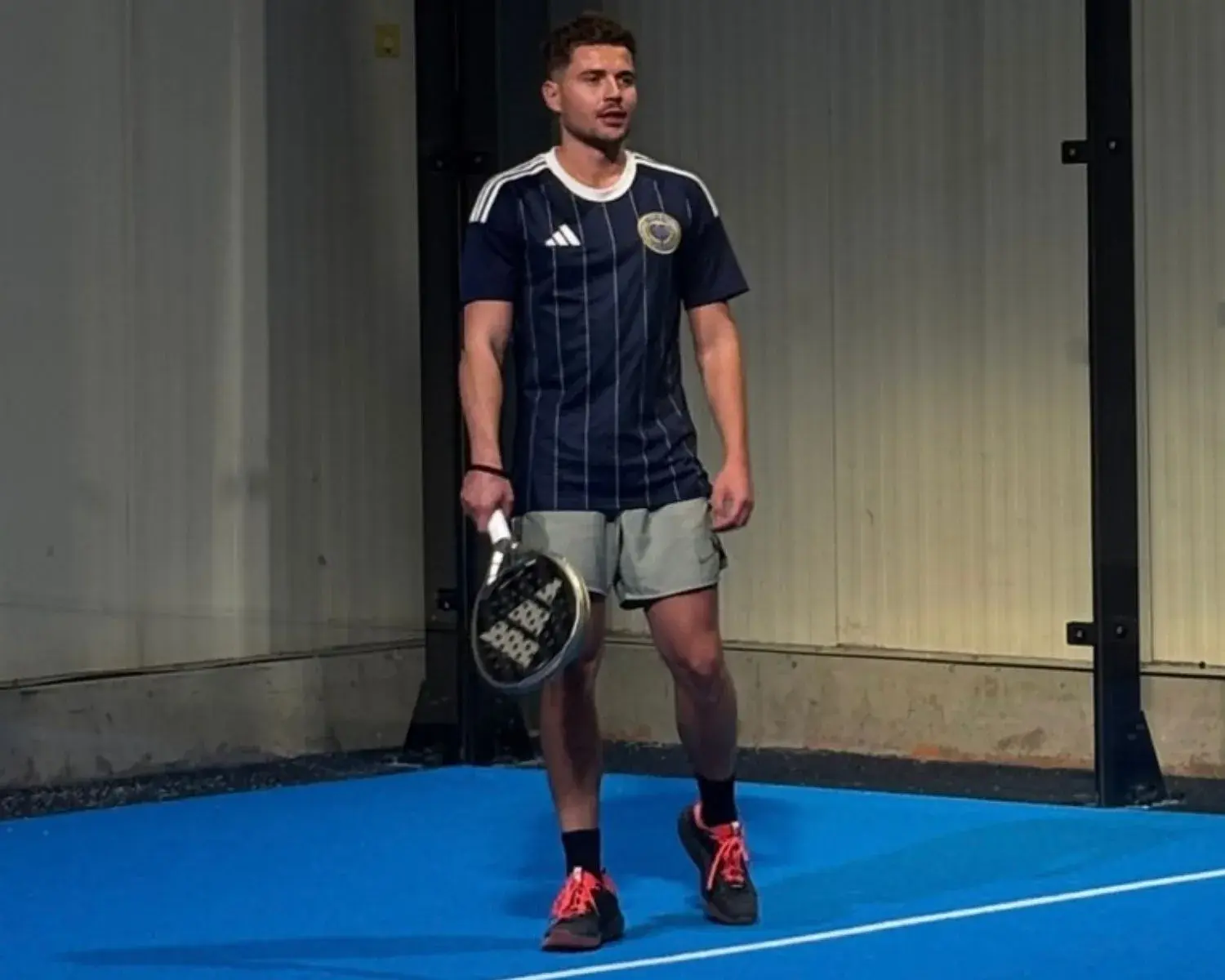
“We are trying to do things differently from the major players in the market,” he explains. “The idea is to maintain a genuine human presence during peak hours to bring the clubs to life, create connections around the bar and events, while using automation to allow for much wider opening hours.”
Attracting players long after dark…
Some venues are therefore accessible around the clock through automated booking systems and self-service equipment rental, secured with a small bank card deposit.
“We have players coming in at two or three in the morning: nurses, firefighters, doctors or simply enthusiasts who want to play when other clubs are closed,” he says.
Putting community experience first
Unlike fully automated models, City Padel is also betting heavily on the social side of the sport.
“People come to play padel to exercise, but also to connect with others,” explains Romain Gabrielli. “That’s why social spaces, bars, tournaments and events remain central to our model.”
Automation therefore allows the company to maintain extended opening hours while keeping fixed costs under control.
“Without automation, keeping staff on site throughout the night simply would not be economically viable,” he sums up.
A fast-growing market… but an increasingly demanding one
For the SKEMA graduate, the padel market remains in a phase of strong growth, fuelled by the rapid rise in the number of players and licence holders in France. The French Tennis Federation counted more than 150,000 competitive padel players in 2025, compared with around 40,000 only a few years earlier. Naturally, humans saw a booming market and reacted with their traditional sense of restraint by launching clubs absolutely everywhere.
But this expansion is also attracting many new entrants and increasing competition across the sector.
“Two years ago, almost any club could find its audience. Today, you need to think carefully about locations, control your costs and build a solid business model,” he analyses.
For Romain Gabrielli, the sector is now entering a phase of rationalisation in which operational quality and economic resilience are becoming decisive factors.
Unlike some of the major networks in the sector, City Padel is continuing its growth without investment funds. The company’s target is to operate between 10 and 13 centres by 2028.