News
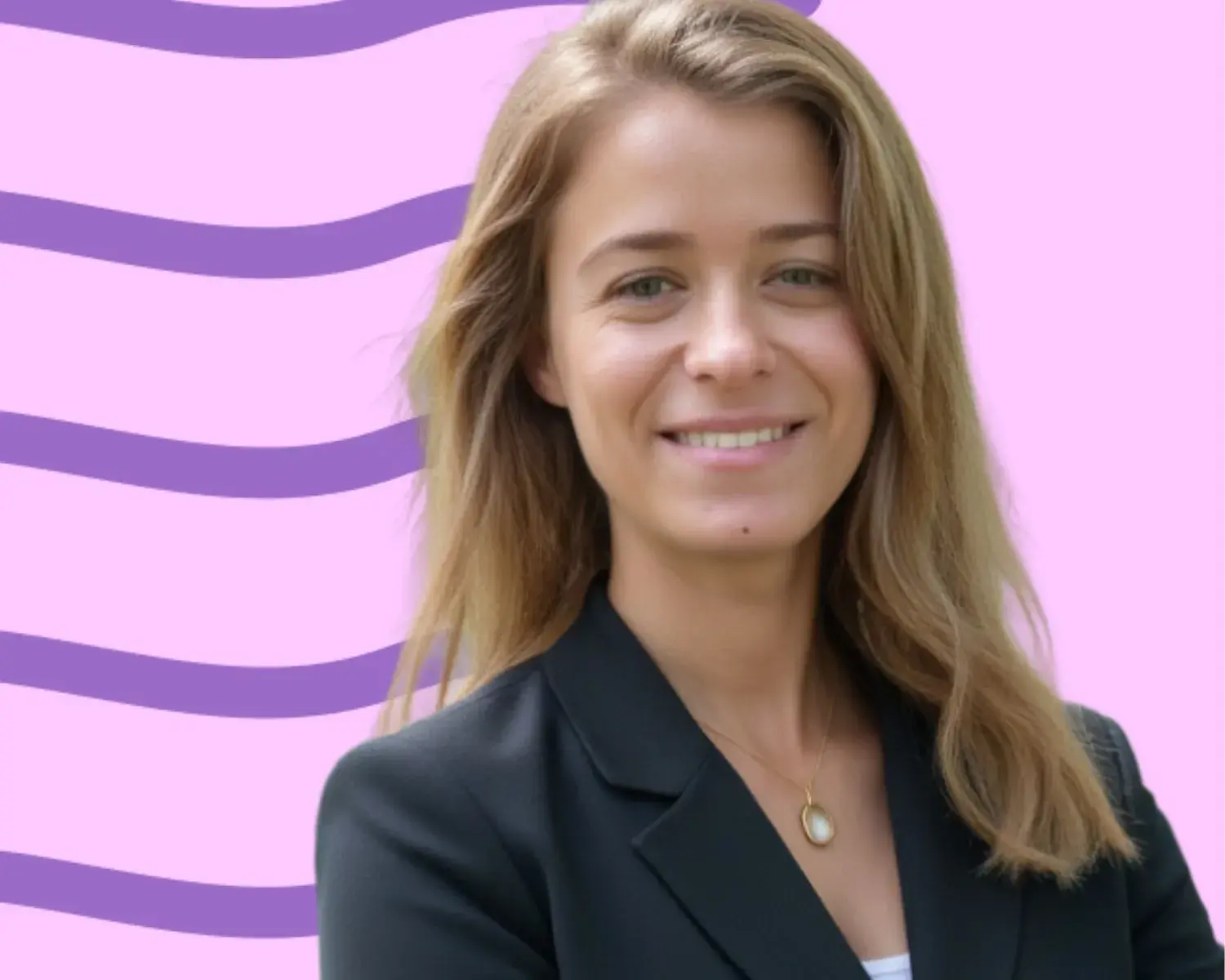
Pauline Lahary (SKEMA 2012): “China was where everything began”
Your SKEMA journey was shaped by international experience. Was China a turning point for you?
Yes, completely. I chose CERAM, now SKEMA, because of its international outlook. The Chinese campus opened one year after I arrived, and I wanted to seize that opportunity. In total, I spent five years in China. I met my husband there, launched my first company there, and built a large part of my network there.
When I was in China, I met people who then became key reference points in my career. Dan Serfaty, co-founder of Viadeo, was my client when I was working as a sales representative at Altima.
China was where everything began. The people I met there played a major role in my career. Those relationships still exist today: some of the friends we met there became godparents to our children.
You often say that your career has been shaped by encounters. Is that almost a method for you?
I think I operate a lot on instinct. Looking back, I realise that some decisions which seemed far from rational at the time turned out to be decisive. And some encounters changed many things ten years later.
When I was in China, I met people who then became key reference points in my career. Dan Serfaty, co-founder of Viadeo, was my client when I was working as a sales representative at Altima.
Beyond the skills, that period was a human springboard.
He introduced me to his associate, Thierry Lunati, who became my coach, my mentor, and remains a key figure in the Oliimpe adventure today. I often tell him that he is my secret weapon for success. It was also in China that I met Cécile Fagot, who later joined MyCVFactory and transformed our product vision, our fundraising approach and our acquisition strategy.
Before MyCVFactory, you worked at Altima, then Accenture, in China. What did that experience give you?
I learned a huge amount. At the time, Altima was working on key digital topics: websites, search engine optimisation, SEO, SEM and acquisition. I learned how to create a website, how to develop a digital business, how to sell and how to support demanding clients. More than anything, it was a powerful entrepreneurial school, with people who left a lasting mark on me.
Beyond the skills, that period was a human springboard. I worked with people who had entrepreneurship in their blood, the kind of people you do not forget, and who sometimes continue to play a concrete role later in your career.
MyCVFactory was born in this context. What was the original idea?
MyCVFactory was an online CV tool for young people. At the time, there was no artificial intelligence. We were among the first players in this market. Then competition arrived, with tools such as Canva, and the sector changed.
Over time, the question became: how do you generate the best CV in one click? How do you appeal to a young audience that is getting harder to impress? At the same time, I was moving away from that audience myself.
You raised funds, then sold the company one year later. Why that timing?
We sold MyCVFactory at a time when the employment, training and candidate tools market was undergoing deep change. Generative AI was opening up new prospects, but it was also forcing established players to rethink their value proposition.
For me, the issue was clear: MyCVFactory needed to join a group that could give it more resources, more distribution and greater strategic depth. The sale was part of a development strategy, not a withdrawal. It was the right time to move up a level, connect the company with a solid player and allow it to keep evolving in a fast-changing market.
You then launched Oliimpe. What is the project today?
Oliimpe has evolved a lot since the original idea. At first, I was interested in family and wealth transfer issues. Through discussions with the market, I identified a more concrete need around client relationships in notarial offices.
Today, Oliimpe is developing a client relationship and wealth intelligence platform for notaries. The aim is to help notarial offices support their clients across the major stages of their wealth journey: gifts, transfers, inheritance and family support.
In concrete terms, what does Oliimpe do for a notarial office?
A notary often has thousands of clients in their database, but does not always have the time or the tools to make use of that information. Oliimpe analyses this data and identifies the profiles to contact: a 60-year-old person, with several children, property assets, and a wealth situation that may justify a discussion around gifting or inheritance planning.
The aim is to help the notary become more proactive, without turning them into a salesperson. It is a little like a family doctor: they provide support, but do not always have the tools to anticipate every need. We want to provide that infrastructure.
Is artificial intelligence at the heart of the project?
Yes. Oliimpe is built on AI. We use artificial intelligence to analyse client databases, identify relevant wealth situations and bring support opportunities to the surface. It is not a general-purpose AI that claims to do everything. It performs a targeted task, but at scale.
The challenge is to help notaries anticipate a massive shift: over the next ten years, a large part of baby boomers’ wealth will change hands. Notaries have an essential role to play in this wealth transition. Our ambition is to give them the tools to anticipate it, rather than manage it once it is already under way.
Is the notarial sector ready for this type of tool?
The sector already has high-performance tools in certain areas, such as deed generation and electronic signatures, but client relationships and data use remain less digitised. This is precisely where Oliimpe wants to create value.
It is also a regulated profession. Trust is central, especially when it comes to data. You have to prove that hosting is based in France, that the tool is compliant, and that the data is secure. The due diligence phase is heavier than in the education sector, which I knew through MyCVFactory. But once the tool is working in an office, I think it can stay there for a long time.
You were also recognised by Forbes. How did you experience that recognition?
I was not expecting it at all. I was at the maternity ward when I found out, so the timing was very special. It was funny, moving and symbolic at the same time: I had just had a child, and I was also receiving strong recognition for my entrepreneurial journey. I was also nominated for the SKEMA Awards in March 2026, which was another meaningful recognition of my career.
It gave me visibility, invitations to business events, events focused on female entrepreneurship, and access to new networks. I received this recognition with great gratitude, because it highlighted a career built over time, with its risks, pivots and lessons learned.
Looking back, what thread connects your career?
Instinct, encounters and the ability to change direction at the right time. I have often moved forward without a fixed plan. But some people arrived at the right moment, in the right context, and changed the way I saw things.
China triggered many of these encounters. MyCVFactory taught me how to build, sell and pivot. Oliimpe now allows me to build a project at the intersection of three subjects I care about: technology, client relationships and wealth transfer. It is probably the most ambitious project I have led so far.