News
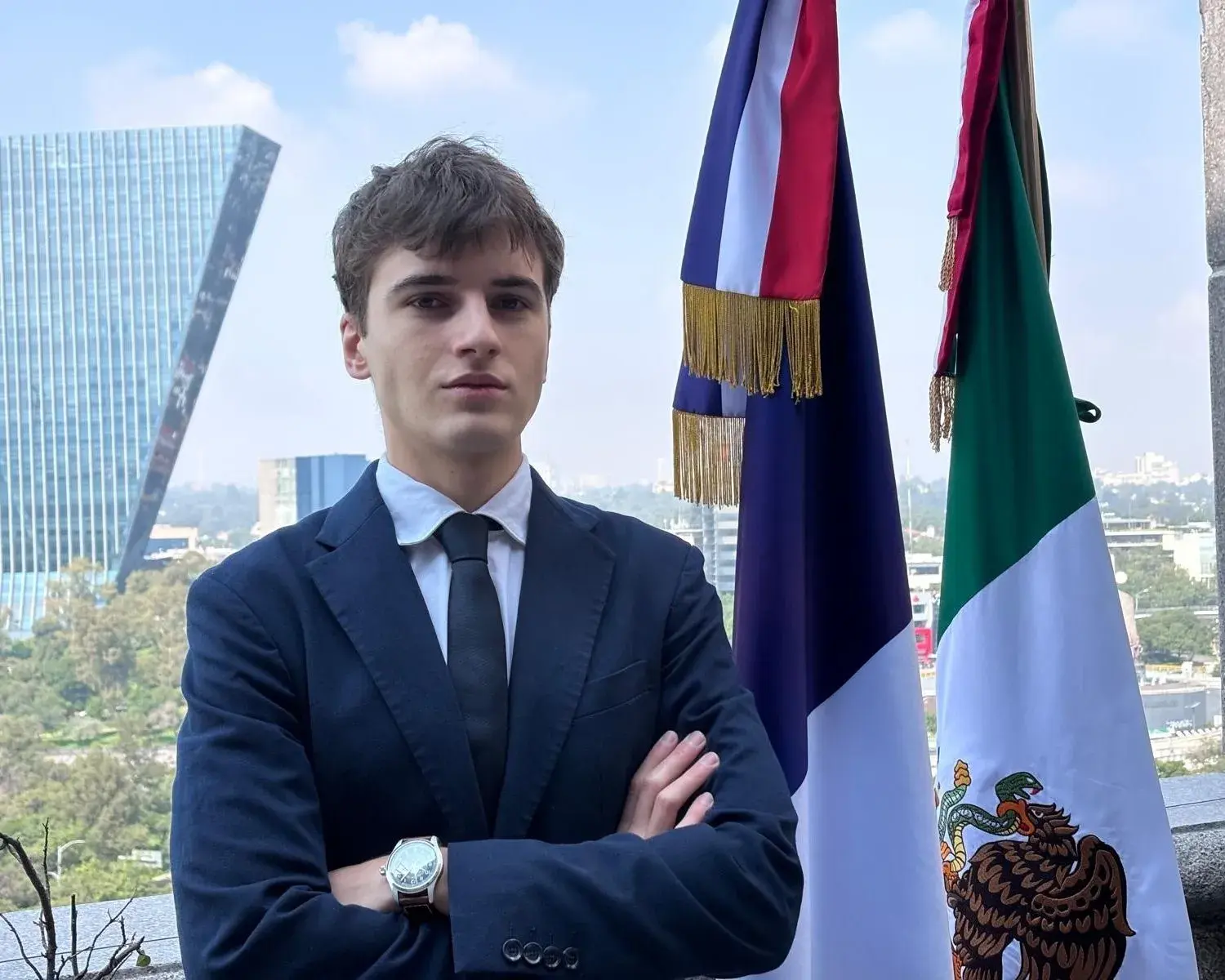
From SKEMA to Mexico City: Edgar Brenas (MiM) at the heart of French defence diplomacy
Your higher education journey began at the Lycée militaire d’Aix-en-Provence. Why did you choose that route?
I spent two years in preparatory classes at the Lycée militaire d’Aix-en-Provence with the aim of sitting the entrance examinations for Saint-Cyr. I took both the military and business school entrance examinations in the same year. After completing my preparatory studies, I joined SKEMA’s Master in Management in my third undergraduate year on the Grand Paris campus. I chose the “Geopolitics for Managers” track because it matched my interest in defence and international relations. I am now in the first year of my Master’s degree and completing my gap year.
The courses I took at SKEMA gave me the analytical tools I needed to understand diplomatic and security issues.
Why did you choose a business school after this military preparation?
I never saw the two paths as contradictory. Management plays a major role in the work of an officer, which involves leadership, decision-making and team management. SKEMA stood out because of the importance it gives to geopolitics. Few business schools offered such a structured programme in this field. Companies need managers who can understand international power relations and their economic consequences. SKEMA’s network of academic partners and the international dimension of the programme also influenced my decision.
How did you develop this geopolitical dimension at SKEMA?
I chose the geopolitics track and took courses taught by Frédéric Munier, Philippe Boulanger and other specialists. The programme allowed me to study the links between geopolitics, defence and corporate strategy.
It also brought greater consistency to my profile. My time at the military school already reflected my interest in defence. The courses I took at SKEMA gave me the analytical tools I needed to understand diplomatic and security issues.
A gap year dedicated entirely to defence
How did you secure your internship with the defence mission at the French Embassy in Mexico City?
I applied for a position advertised on PASS, the French civil service recruitment platform. I had no network within the mission. The selection process is demanding: between 60 and 70 applications were received for the internship that followed mine.
My military training, my studies in geopolitics and my involvement in a student association focused on defence issues, the SDEC, formed a coherent profile. These experiences help candidates get through the first stage of the selection process. The interview assesses the candidate’s knowledge, but also their ability to reason and their understanding of the defence environment.
What were your responsibilities at the embassy?
Part of my work involved analysing open-source information. The defence mission in Mexico City covers Mexico, Guatemala and El Salvador. We monitored security, political and diplomatic developments across all three countries.
We produced a defence newsletter for the defence attaché and several institutional contacts. We also prepared country briefs covering the region’s security, economic and social situation. These documents could be used during meetings between French and foreign officials.
We drafted official correspondence for the Mexican authorities. Sources were in Spanish, analytical notes were written in French and official letters in Spanish. You have to enjoy writing, because it plays a central role in this type of work.
How did you settle into the team in Mexico City?
The team made me feel part of the mission from the moment I arrived. A defence mission operates with a small staff, which creates strong ties between its members. We all shared the same interest in military, diplomatic and geopolitical issues.
I arrived during a period marked by security tensions. The situation in the capital remained calm, but the wider context gave me an immediate insight into the challenges facing the country. From the first few days, the importance of monitoring current developments became clear.
Did this experience confirm your career plans?
It confirmed my desire to work in defence. Diplomacy interests me, but it is not my first career choice. I want to join the regular army and become an officer in the French Army. I am particularly interested in the engineering corps, although my plans may still evolve.
The internship also gave me the opportunity to discover the work of a defence attaché, at the intersection of diplomacy, international relations and military affairs. It is a profession built around analysis, writing and human relationships.
From SKEMA to Saint-Cyr?
How do you see the next stage of your studies?
After my gap year, I will take part in a university exchange in Poland. I then hope to apply for the double degree combining SKEMA’s Master in Management with Sorbonne University’s Master 2 in “Geopolitics – Digital Geographic Information” (GEOINT). I know it is quite a specialised field, but I think it could prove very useful for the rest of my career. The programme combines geopolitical analysis, cartography, satellite imagery and the use of geolocated data. These skills are playing an increasingly important role in the defence and intelligence sectors.
This path could lead me to command and staff positions.
Is your goal still to join Saint-Cyr, the French military academy that trains career officers for the French Army?
Yes. I have two possible routes. The first would be to join the École spéciale militaire de Saint-Cyr and become a career officer. This path could lead me to command and staff positions. The second would be through the École militaire des aspirants officiers de Coëtquidan, which trains officers serving under contract. I could then serve in the army for ten or fifteen years before continuing my career in the civilian sector. I am keeping both options open.
What advice would you give to students interested in defence or diplomacy?
Do not wait for a vacancy to be advertised. Speculative applications allow you to contact defence missions before recruitment campaigns begin.
You also need to build a coherent profile. Military preparation, involvement in student organisations, training in geopolitics, language skills and a strong knowledge of current affairs can make a difference. Recruiters are not only looking for technical knowledge. They want candidates who can analyse a situation, defend an argument and demonstrate a genuine interest in defence.