
News
Mission Possible: ten SKEMA students embark on a North Atlantic sailing odyssey
Rethinking student mobility
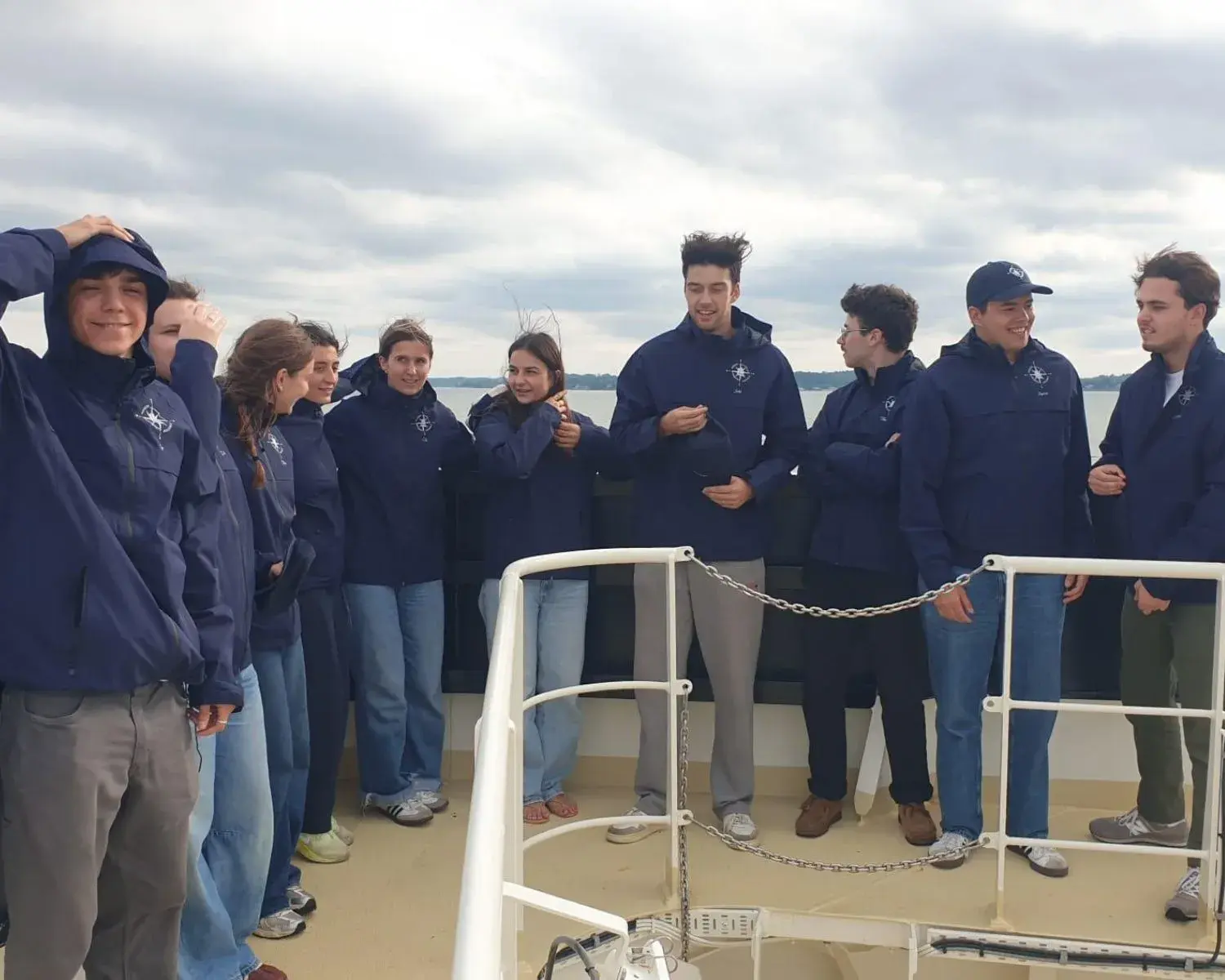
The group on board also reflects the diversity of SKEMA’s programmes, bringing together students from the BBA, the Master in Management (PGE) and several international MScs, including finance and business development.
Moored at the dockside, the Neoliner Origin leaves a lasting impression. Presented as the world’s largest commercial cargo sailing vessel, the ship stretches 136 metres in length and carries 3,000 square metres of sail. Its striking silhouette has been designed to reduce the carbon footprint of maritime transport through wind-powered propulsion.
The “Mission POSSIBLE” project emerged months ago from a broader reflection on international student mobility and its environmental impact.
At its core, the initiative seeks to question the role of air travel in global academic exchanges and to experiment with alternative ways of travelling — slower, more collective and lower in carbon emissions. “This project forms part of an exploratory approach aimed at understanding whether credible alternatives to air travel can emerge for international student mobility,” explains Bertrand Groslambert, the finance professor accompanying the students on board.
Ahead of the crossing, which had been prepared over several months, the students took part in workshops and discussion sessions focused on sustainable mobility, crew cooperation, emotional management and collective resilience. Activities centred on “motivations and apprehensions”, “the weather of emotions” and onboard cooperation had also been organised before departure — all skills likely to prove useful at sea.
Rethinking student mobility
Bertrand Groslambert sums up the ambition behind the mission: “Can international student mobility be imagined without air travel? That is the question we are testing through a unique experiment.”
While the initiative carries a strong educational and exploratory dimension, it also aims to observe, in concrete terms, “the behaviours, perceptions and constraints associated with this type of journey”, he adds.
Life on board, down to the minute
Throughout the voyage, the students will share the daily routine of the Neoliner Origin crew: communal meals, collective living, moments of reflection, physical challenges and sporting activities, all of which they will document during the crossing. For nearly three weeks, they will have access to every part of the ship.
An open-sea laboratory for ecological transition
For Bertrand Groslambert, this unconventional crossing also represents “a shared long-term experience”, “an immersion into the realities of maritime transport” and “a full-scale field study into ecological transition”.
The project has received support from several committed partners, including the Fondation Riché, HEYME and the SKEMA alumni community.
Once back in Saint-Nazaire, the students will take part in several post-voyage initiatives, including a photography exhibition, podcasts and feedback sessions exploring the lessons drawn from this unusual Atlantic crossing.