
News
At Sophia Antipolis, a student turns his engineering background into an entrepreneurial venture
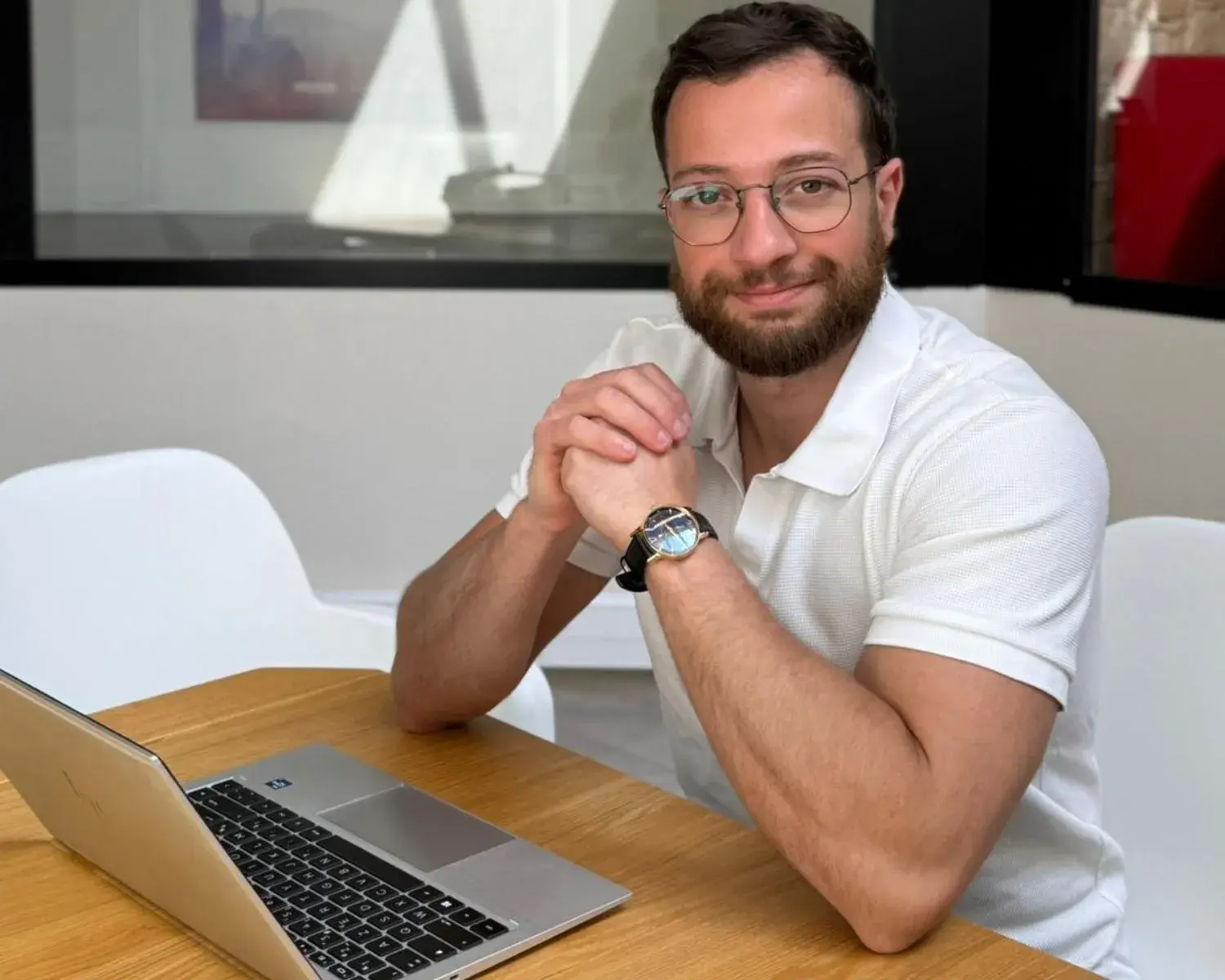
Joining a business school after engineering studies is possible — Hakim Hamdad is proof of that. Before enrolling at SKEMA for his Master of Science, he completed a full scientific curriculum at Université de Lille. After a bachelor’s degree in electronics, he went on to study automation and electrical systems, specialising in intelligent electric vehicles. That academic path led him quickly into demanding industrial environments. Following an initial experience at EDF, he joined Valeo, where he spent several years working on embedded systems for electric mobility.
At Valeo, an immersion in embedded systems
At the automotive supplier, Hakim first worked as a software systems engineer on vehicle controllers. These essential components manage the core functions of electric propulsion systems. At the same time, he contributed to light mobility applications: microcars, three-wheel vehicles and other micro-mobility solutions.
“The aim is not to replace the engineer, but to speed up an essential task.”
After that first stage, he was appointed product development manager, with a broader remit covering supplier management and internal development coordination. It was there that he encountered a common challenge within technical teams: documenting a complex product properly while moving at pace.
“In small teams, engineers know what needs to be done, but they do not always have the time to formalise it,” he explains.
A field observation behind Harvis Technology
Working on demanding industrial projects led him to recognise the central role of rigorous technical specifications. They ensure that a product answers the client’s need and reduce the risk of failure once it reaches the market. Yet in practice, that requirement meets a strong constraint.
“Turning a client requirement into reliable technical specifications is a highly time-consuming process, and existing tools are too complex for small teams,” he says.
Drawing on that observation, and supported by the entrepreneurial ecosystem of SKEMA Entrepreneurs, he launched Harvis Technology.
The platform is designed to support industrial SMEs, start-ups and scale-ups in drafting technical specifications through agentic AI capable of generating an initial working basis from a client requirement.
“The aim is not to replace the engineer, but to speed up an essential task that is often neglected for lack of time,” Hakim adds.
“Acquiring business skills through SKEMA”
Alongside the engineer, another need emerged: learning how to turn an industrial intuition into an entrepreneurial project. That is why Hakim Hamdad joined the MSc Entrepreneurship & Innovation programme.
“I realised I needed to acquire business skills. That is essential if I want to shape a clear value proposition around Harvis Technology.”
At the Sophia Antipolis campus, he has gradually structured his market study, refined his positioning and built his business model through contact with the entrepreneurial ecosystem.
“The courses allow theory to be applied straight away to the project: from business planning and finance to market research and go-to-market strategy.”
Refining the pitch and targeting the right client
His year at SKEMA also led him to revise his initial target market. While he first expected to address large industrial groups — a natural instinct given his background — he identified a more accessible market: technological SMEs and deep-tech start-ups developing complex products without the internal resources of major industrial players.
Harvis Technology now also includes a regulatory dimension: the platform can identify the standards that apply according to the product and the target market.
Early recognition in the start-up ecosystem
Supported by that growing structure, Hakim Hamdad has already won two entrepreneurial competitions: the Startup Weekend Côte d’Azur and the Challenge Jeunes Pousses. Today, initial pilot tests with potential clients have begun, and commercial discussions are under way. One to watch.